UGC Deals: What an Offer Contains and Where to Find One
A UGC deal is a fee plus a license. The 7 terms inside every offer, read off real platform contracts, and the 4 routes deals come from.
A UGC deal is a paid agreement in which a brand buys short-form footage from a creator together with a license to use it, usually in the brand's own ads, product pages and emails rather than on the creator's feed. The fee is one line. The rest fixes the deliverables, the license, the revisions, who pays for the product, what the creator may not do afterwards, and when the money moves.
Every term below comes from the pricing pages, terms and help centers of platforms in our directory, with clause numbers where our reviews and records quote them. We don't take jobs or time payouts, so every payment window here is the platform's own statement.
The seven terms inside a UGC deal
What a UGC creator does covers the job and what brands pay. This is the contract read from the creator's side.
| Term | What it settles | How platforms in our records set it |
|---|---|---|
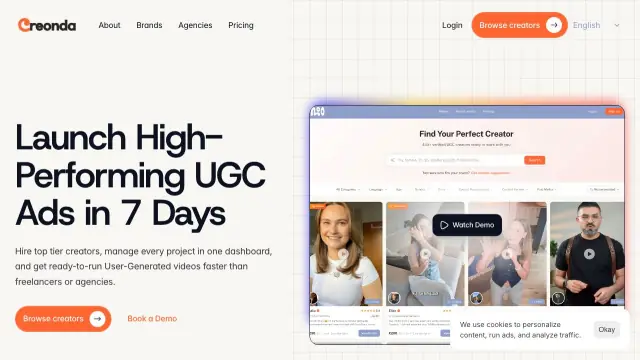
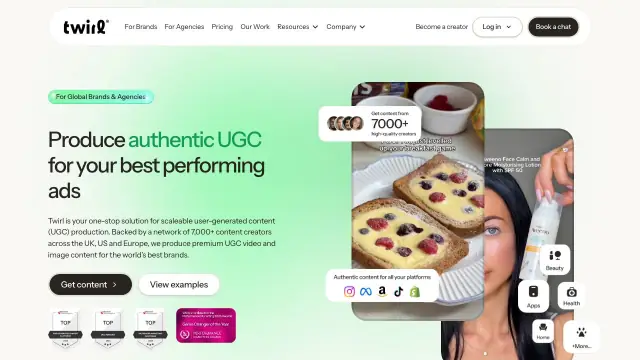
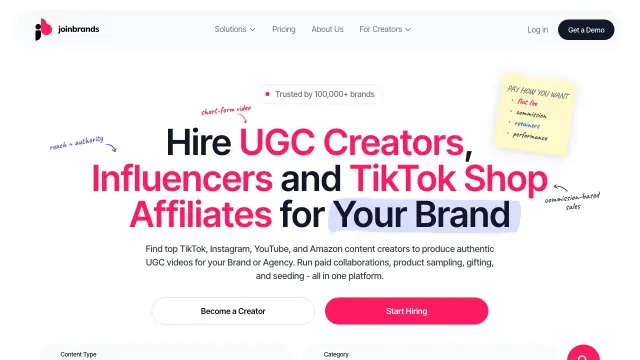
| Deliverables | Length, hooks, edited or raw, formats | Creonda's base package on every profile we read: "30s video · 1 hook · 3 months rights". Twirl bundles raw plus final edit in two formats. JoinBrands lifts the job price 10% for 30 seconds and 20% for 60 |
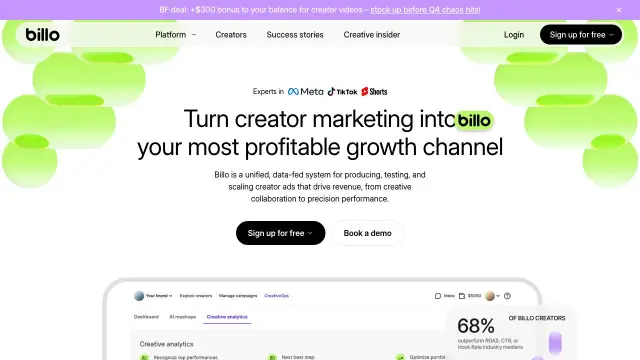
| License | Channels, term, territory; transfer or license | Billo Brand Terms §8.1 assign everything worldwide on approval. Insense licenses digital and CTV only. Creonda's default runs 3 months |
| Revisions | How many rounds, and what counts as one | Billo includes two per video. Insense's creator terms include "up to 3" before extra fees. JoinBrands runs from 1 to 10 depending on the brand's plan |
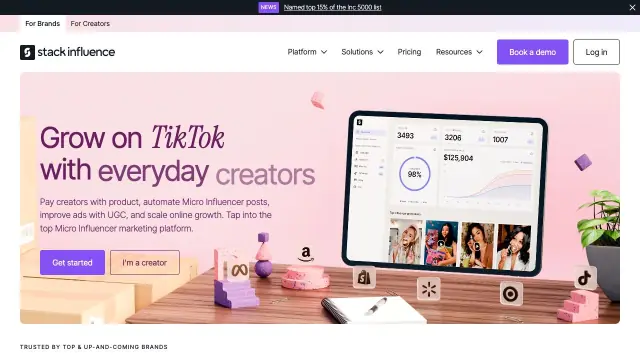
| Product | Shipped, reimbursed, or kept as the fee | JoinBrands offers a reimbursement delivery method. Stack Influence creators buy the product and are paid back after posting |
| Paid-ad access | Spark codes, Partnership Ads, whitelisting | JoinBrands folds Spark and Instagram Partnership Ad codes into the content price. minisocial includes 30 days of whitelisting per project. Twirl prices it on request |
| Exclusivity | Who you can work with afterwards, and how | Collabstr ToS §3: any brand you meet there transacts with you only through the platform for 18 months from your first order |
| Payment | Escrow, release trigger, payout window | Brands Meet Creators releases escrow when the video publishes. Collabstr, Youdji and Creonda release on the brand's approval |
The license is the part you can sell twice. On platforms that bundle perpetual rights into a fixed price, as Clip and soona UGC both do, the rights are already priced and you take or leave the job whole. Where rights are negotiated per order, they are yours to price: Collabstr's ToS §11 gives the brand only a license to review the file unless the order transfers rights, and a Creonda renewal means the brand pays you again, conditional on your agreement. Youdji's own site examples put ad broadcasting rights at roughly $150 on top of a video.
Revision scope matters more than the count. JoinBrands' help center says creators are "only required to make changes that match the original job requirements." Billo's Brand Terms §4.6 exclude requests that "introduce new requirements or material changes." Collabstr allows unlimited revisions "aligned with the original content requirements." In every case the brief is your protection.
The approval clock usually works for you. Collabstr's brand review window is 72 hours (ToS §2), after which the order auto-approves and funds release. JoinBrands auto-approves after 10 days, Creonda releases escrow after 14, and UGC4you treats content as approved after 7 working days. On those platforms, a brand that goes silent does not freeze your payment.
Where UGC deals come from
Best UGC platforms for creators ranks individual platforms by cut, entry gate and payout timing; this is the shape of each route.
| Route | Who sets the price | What reaches you | Examples in our records |
|---|---|---|---|
| Brief-based marketplace | The brand, inside platform floors | The brand's fee, less any creator-side cut | JoinBrands, Insense, Influee, Influentials, Clip, UGC4you |
| Listing-based marketplace | You, on your profile | The agreed price minus 15–20% | Collabstr, Youdji, Creonda, Collabios |
| Gifting and seeding | The brand, in product | The product, kept or reimbursed | Skeepers, Stack Influence, Moast |
| Job boards and direct pitching | Negotiated | The whole fee, settled between you and the brand | CreatorJobs, your own outreach |
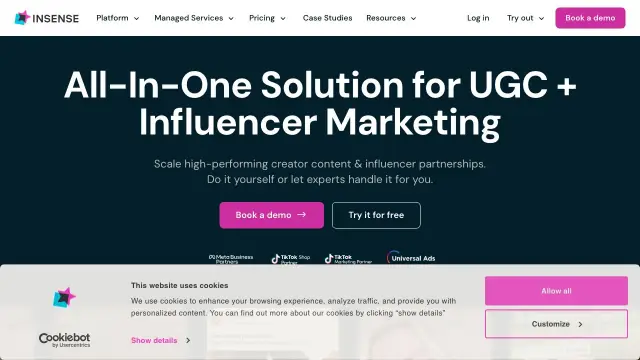
Brief-based marketplaces publish the brand's side, which bounds yours. JoinBrands' help center sets a $50 floor and a $60 US default for a classic video, with Level 2 creators priced 50% above base and Level 3 at double. That is the job price, not your take: the help center also sets a 20% fee on creators' job earnings and performance bonuses (15% on Creator Pro), on top of the 8–15% the brand pays, so a $60 job nets you $48 by our arithmetic. Express jobs, tips and product reimbursements carry no fee. Insense's pricing page says UGC campaigns start at $100 per video. Influee cites creator rates of $26 to $70+ per 30-second video, about $58 for a US creator, and adds its 10% on top: a $100 fee bills the brand $110 and you are owed $100. Influentials states it "never takes a fee on what you earn" and guides brands to €50–€250 per creator on paid campaigns. UGC4you, where brands post a budget and creators bid, withholds 15% from the payout; its own example nets a creator €127.50 on €150.
Listing-based marketplaces let you set the price and take a cut of it. Collabstr charges creators 15% of the payout while charging the brand 10%, so a $150 listing pays you $127.50. Youdji takes 20% of creator earnings and charges brands nothing, so the same $150 nets $120 (both by our arithmetic). Creonda's pricing page labels the creator plan 0% commission, but its FAQ and Terms §9.2 put your net at the agreed total less its 20%; Collabios takes 15% on completed orders. List the number you want to net, not the one you want to charge.
Job boards can take no cut and leave payment to you. CreatorJobs' AGB 4.4 states it charges no commission, and 4.2–4.3 place payment, contract and usage rights entirely between you and the brand. On 60 of 69 job pages we sampled in September 2026, the budget shown ran from 50 to 750 (no currency given, placeholders aside), most often 300, and none was posted in 2026. viral.app runs payment itself: its billing docs charge the 3% payout fee to the brand, while its payout provider Talentir deducts method fees from your transfer on some claim methods (2.5% on PayPal, 3.5% on Venmo, the equivalent of €5 on SWIFT and wires, as of September 2026).
Direct pitching keeps the whole fee and makes you the escrow, the contract and the collections department. Platform contracts close this route for brands you met on them. Collabstr's 18-month lock binds the creator as much as the brand. Insense's creator terms say campaign content "will only be amplified or licensed exclusively through Insense during and after the term." UGC4you's terms art. 5.5 bar creators from dealing directly with clients found there, and viral.app's terms bar brands from working with a creator met there outside the service for 24 months after first contact or the last managed collaboration, whichever is later. Pitch brands you found yourself, not brands a platform introduced.
Gifting deals are paid in product
A gifting deal is still a deal; its fee is the product. Our Skeepers record puts its vetting bar at roughly 1,000 followers and 2% engagement; it runs gifting campaigns and operates a credit system that penalizes creators who accept a product and never deliver. Stack Influence has creators buy the product and reimburses them after posting, so you front the money. Moast's FAQ states creators are paid "in product, never cash." minisocial's brand pricing is stated as inclusive of creator fees, while creator-side reviews describe many of its campaigns as gifted.
Read the rights line before you treat a gift as low stakes. Stack Influence includes a full-rights UGC license in its per-post fee, and Moast's collect page promises brands full usage rights "with no time limit," in marketing copy rather than in the 2022 terms it links. A gifted video can carry broader rights than a paid one. That can be a fair trade for a portfolio piece.
How to evaluate a UGC offer before you say yes
- Work out the net. Subtract the platform cut and any payout-method fee from the number in the brief.
- Match the rights to the fee. Organic-only, a dated paid-ad window and perpetual paid use are three different prices. Our UGC rate calculator models paid-ad rights at +30% for three months up to +100% for perpetual.
- Count the revisions and save the brief. The original requirements are what separate a revision from a new job.
- Price the product. Shipped to you, reimbursed after posting (you front the cost), or yours to keep as payment.
- Read the exclusivity. Category exclusivity is a separate charge, which our calculator models at +25%. Anti-circumvention is a separate clause, and it binds you.
- Check the payment terms. Escrow or not, what triggers release, and the stated window. Influentials' creator page promises payouts "within days" while its Creator Terms say within 30 days of approval. Creonda's How It Works page says payment releases the moment the brand approves; its Terms §6.2 make payout wait on your compliant invoice.
- Look for AI-use language. JoinBrands' Creator Agreement §3.4.2 says content you sell there "may be used by brands and by JoinBrands in AI tools, including training models."
Red flags in the record
These are contract clauses and attributed third-party sentiment from our records, not findings from taking jobs; how we score explains the difference.
- A clause against negotiating rights. Vidovo's Usage Rights Policy prohibits creators from discussing, negotiating or charging for usage rights at all, with removal "without entitlement to any pending or future compensation" as the penalty.
- Disputes and unpaid work. A Billo creator on Trustpilot with 593 completed videos describes disputes resolved in the brand's favour and unpaid compensation.
- Payout delays. A Collabstr creator on Trustpilot reports a $51 payout still missing seven days after its scheduled date; in the terms and payout-methods article we read in September 2026, we found no target payout timeline. A #paid creator on Trustpilot reports about $5,000 unpaid after seven months.
- Withheld funds. SideShift held 2.0/5 across 11 Trustpilot reviews in September 2026, every one a single star, with creators citing withheld earnings.
- Verification limbo. JoinBrands creators on Trustpilot report accounts stuck in verification for months.
- Reimbursement disputes. Stack Influence creators on Trustpilot describe automated rejections and disputed reimbursements.
UGC deals FAQ
How do I get UGC deals with no followers?
Apply where the gate is a portfolio rather than an audience. Brief-based marketplaces review sample work; Influentials sets no follower minimum on its UGC track, against roughly 1,000 on its influencer track. Follower thresholds cluster on the gifting side.
Are UGC brand deals negotiable?
On listing marketplaces you set the price, and Creonda's profiles say outright that the "Budget is negotiable." On brief-based ones the brand sets it inside platform rules, though JoinBrands' level system prices Level 2 and 3 creators above base, before its 20% creator fee.
Where can I find UGC deals without paying to join?
Youdji, Creonda, Collabios, Influentials and Brands Meet Creators all let creators join free. The platform's money comes from a cut of the agreed price on Youdji, Creonda and Collabios, and from a fee billed to the brand on Influentials. CreatorJobs inverts that: no commission, but a paid tier once you want more than three applications a month.
Bottom line
A UGC deal is a fee, a license and a handful of smaller promises around them, and those promises are where two offers at the same price diverge. Net out the cut, price the rights, and keep the brief.
Next read: UGC usage rights, the clause-by-clause view of what 14 platforms grant.
Sources consulted
as of 2026-10-19- collabstr.com (opens in a new tab)
- joinbrands.com (opens in a new tab)
- youdji.com (opens in a new tab)
- creonda.com (opens in a new tab)
- influentials.com (opens in a new tab)
- stackinfluence.com (opens in a new tab)
- creatorjobs.com (opens in a new tab)
- viral.app (opens in a new tab)
- trustpilot.com (opens in a new tab)