跳过主要内容
Buying guide · 8 platforms ranked

Best UGC Platforms for Established Brands

Brands with real budgets should shortlist Insense ($400/mo, self-serve, perpetual rights) before any enterprise contract — it covers most UGC needs at a fraction of Aspire's ~$11,000-$24,000/yr or Upfluence's mandatory 12-month deal. Go enterprise only when you need attribution, seeding, and creator CRM at scale.

Our pick is Insense — $400/mo, 4.5/5 on G2.

Insense homepage screenshot

VerifiedEvery price checked against the official pricing page · last verified Sep 2026

Researched by Gan Liu · Founder & lead researcher

At a glance

Scroll the table sideways to see every column.

Best UGC Platforms for Established Brands — 8 platforms ranked, with starting price, rating and what each is best for.
RankPlatformStarting priceRatingBest for
1Insense$400/mo(Brand plan, billed annually)4.5out of 5 on G2DTC/Shopify brands running always-on UGC pipelines for Meta and TikTok ads
2GRIN$04.5out of 5 on G2DTC/ecommerce brands on Shopify running always-on influencer seeding and affiliate programs
3Aspire~$1,000-$2,000/mo(custom quote, billed annually)4.6out of 5 on G2Mid-market and enterprise ecommerce brands running always-on influencer programs at scale
4Cohley~$200-$500+ per video4.4out of 5 on G2Mid-market and enterprise e-commerce brands needing UGC, pro photo/video, and reviews from one vendor
5minisocial$3,000/project(10 creators)—DTC/CPG brands wanting UGC assets plus organic micro-influencer reach in one buy
6#paid$499/mo4.7out of 5 on G2Mid-market and enterprise B2C brands running always-on influencer programs
7Upfluence~$478/mo4.6out of 5 on G2E-commerce brands on Shopify/WooCommerce/Amazon that want influencer campaigns tied directly to tracked sales
8Skeepers~€1,250/mo4.4out of 5 on G2Mid-market and enterprise e-commerce brands wanting reviews + influencer UGC from one vendor
Top 8

The leaders in this ranking at a glance. Every pick, with the full verdict, is below.

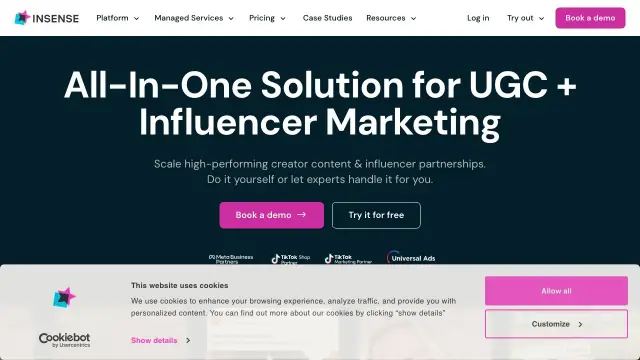
Insense homepage screenshot

Number 1: Insense

insense.pro · UGC Creator Marketplaces

$400/mo

The self-serve baseline every brand should price first: $400/mo annual, 100k+ creators, agency plan managing 5 brands at a 7% fee, perpetual rights automated on approval.

4.5 out of 5 on G2(374 reviews)Visit
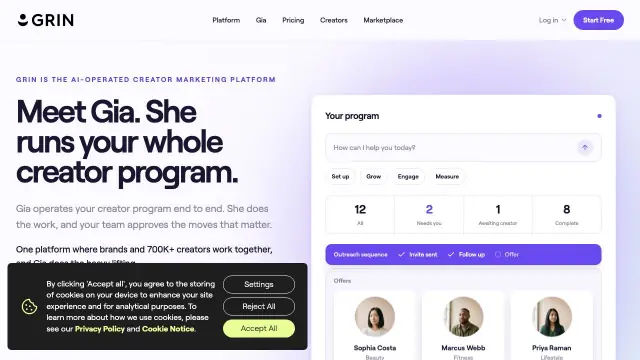
GRIN homepage screenshot

Number 2: GRIN

grin.co · Influencer Marketing Platforms

$0

Creator-relationship CRM for ecommerce brands managing 100+ creators: free tier, paid from $200/mo, best-in-class Shopify seeding and affiliate tooling, G2 4.5/5 (483 reviews).

4.5 out of 5 on G2(483 reviews)Visit
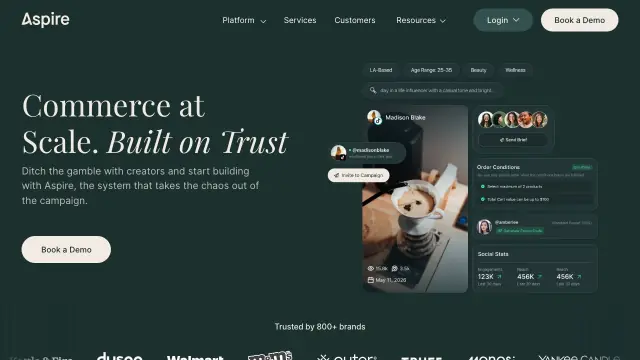
Aspire homepage screenshot

Number 3: Aspire

aspire.io · Influencer Marketing Platforms

~$1,000-$2,000/mo

Enterprise influencer + UGC programs with strong account management: ~$1,000-$2,000/mo billed annually, G2 4.6/5 (144 reviews). Annual lock-in and no trial — negotiate before signing.

4.6 out of 5 on G2(144 reviews)Visit
Cohley homepage screenshot

Number 4: Cohley

cohley.com · UGC Creator Marketplaces

~$200-$500

UGC, pro photo/video, and FTC-compliant review sampling from one vendor with perpetual rights included; custom-quoted with a dedicated CSM. Near-100% campaign completion rates cited on G2 (4.4/5, 70 reviews).

4.4 out of 5 on G2(70 reviews)Visit
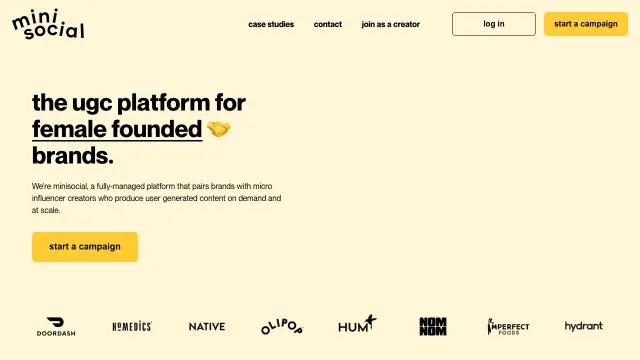
minisocial homepage screenshot

Number 5: minisocial

minisocial.com · Managed UGC Services

$3,000/project

Project-based alternative to a platform contract: $3,000 per fully-managed 10-creator campaign with permanent usage rights — good for brands that campaign in bursts rather than always-on.

Not yet ratedVisit
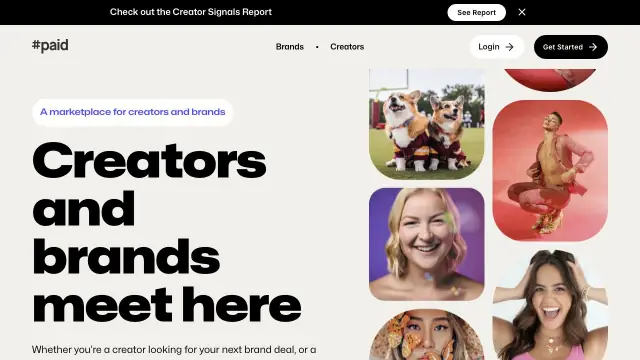
#paid homepage screenshot

Number 6: #paid

hashtagpaid.com · Influencer Marketing Platforms

$499/mo

Best for whitelisted creator ads: $499/mo with a human-vetted opt-in creator pool and mature paid-amplification workflow, G2 4.7/5 (429 reviews). Creator payment-delay complaints on Trustpilot are worth monitoring.

4.7 out of 5 on G2(429 reviews)Visit
Upfluence homepage screenshot

Number 7: Upfluence

upfluence.com · Influencer Marketing Platforms

~$478/mo

12M+ creator database with direct sales attribution to Shopify/Amazon, ~$478/mo on a 12-month contract. Realistic configurations reportedly run $1,276+/mo — model total cost before the demo call.

4.6 out of 5 on G2(139 reviews)Visit
Skeepers homepage screenshot

Number 8: Skeepers

skeepers.io · Influencer Marketing Platforms

~€1,250/mo

The European enterprise suite: verified reviews, micro-influencer gifting, and live shopping in one vendor (~€1,250/mo estimated, quote-only). Strong French/EU creator coverage; Trustpilot 2.1/5 flags support and auto-renewal issues.

4.4 out of 5 on G2(87 reviews)Visit
  1. Insense logo

    Insense

    Creator marketplace for UGC and creator ads with 100k+ creators across 35+ countries

    $400/mo4.5out of 5 on G2Creator applications within 48 hours; content delivered in roughly 14 days (product shipping and revisions can extend this)Verified Sep 2026

    The self-serve baseline every brand should price first: $400/mo annual, 100k+ creators, agency plan managing 5 brands at a 7% fee, perpetual rights automated on approval.

  2. GRIN logo

    GRIN

    AI-operated creator marketing platform for ecommerce brands, powered by the Gia agent

    $04.5out of 5 on G2Verified Sep 2026

    Creator-relationship CRM for ecommerce brands managing 100+ creators: free tier, paid from $200/mo, best-in-class Shopify seeding and affiliate tooling, G2 4.5/5 (483 reviews).

  3. Aspire logo

    Aspire

    Enterprise influencer marketing platform for ecommerce brands, formerly AspireIQ

    ~$1,000-$2,000/mo4.6out of 5 on G2Verified Sep 2026

    Enterprise influencer + UGC programs with strong account management: ~$1,000-$2,000/mo billed annually, G2 4.6/5 (144 reviews). Annual lock-in and no trial — negotiate before signing.

  4. Cohley logo

    Cohley

    Custom-priced UGC and content generation platform for mid-market and enterprise brands

    ~$200-$5004.4out of 5 on G2Verified Sep 2026

    UGC, pro photo/video, and FTC-compliant review sampling from one vendor with perpetual rights included; custom-quoted with a dedicated CSM. Near-100% campaign completion rates cited on G2 (4.4/5, 70 reviews).

  5. minisocial logo

    minisocial

    Fully-managed micro-influencer UGC campaigns for DTC brands, from $3,000 per project

    $3,000/projectRoughly 3-4 weeks per campaign in practice (one documented creator campaign ran ~26 days from approval to submission deadline; creators must deliver content within 3 business days of creating it); no official turnaround is publishedVerified Sep 2026

    Project-based alternative to a platform contract: $3,000 per fully-managed 10-creator campaign with permanent usage rights — good for brands that campaign in bursts rather than always-on.

  6. #paid logo

    #paid

    Creator marketplace matching vetted influencers with brands for content and paid ads

    $499/mo4.7out of 5 on G2Verified Sep 2026

    Best for whitelisted creator ads: $499/mo with a human-vetted opt-in creator pool and mature paid-amplification workflow, G2 4.7/5 (429 reviews). Creator payment-delay complaints on Trustpilot are worth monitoring.

  7. Upfluence logo

    Upfluence

    All-in-one influencer and affiliate marketing platform with a 12M+ creator database

    ~$478/mo4.6out of 5 on G2Verified Sep 2026

    12M+ creator database with direct sales attribution to Shopify/Amazon, ~$478/mo on a 12-month contract. Realistic configurations reportedly run $1,276+/mo — model total cost before the demo call.

  8. Skeepers logo

    Skeepers

    French UGC suite combining verified reviews, micro-influencer campaigns, and live shopping

    ~€1,250/mo4.4out of 5 on G2Verified Sep 2026

    The European enterprise suite: verified reviews, micro-influencer gifting, and live shopping in one vendor (~€1,250/mo estimated, quote-only). Strong French/EU creator coverage; Trustpilot 2.1/5 flags support and auto-renewal issues.

How this ranking works: positions are editorial, based on verified pricing, third-party review distributions, turnaround, and usage-rights terms. Paid placement exists on this site and is always labelled “Sponsored”, but it buys a slot elsewhere — it never buys a position in this list. We currently carry no affiliate links on platform reviews.

Buyer’s guide

Search for the best UGC platform for brands and you get the list a solo Amazon seller gets. A seller buys a video. A brand buys a license, a vendor its legal team will sign with, and a cost line that survives budget review. The ranking above orders the vendors; this is what you are signing.

You are buying a license, not a video

An approved file is worth nothing until you know which channels you may run it on, for how long, and who controls that — what a UGC licence has to spell out, clause by clause. Rights split three ways here.

Bundled and broad. Cohley includes perpetual usage rights across channels on all content, with no per-asset rights fee. minisocial includes its "mini license" — unrestricted, non-expiring use across organic social, paid acquisition, web, email, and print — plus 30 days of whitelisting/Spark Ads access in every project.

Bundled but scoped. Insense transfers perpetual rights automatically on approval with no separate fee, but its terms limit the grant to organic and paid use on digital marketing and connected TV channels. Broadcast TV, print, and out-of-home are not named anywhere in its documents, and no extension price is published.

Not bundled at all. Aspire, Upfluence and GRIN each leave licensing to per-campaign negotiation with individual creators through their contract tools; none prices rights at a flat platform rate. Two of them, GRIN and Aspire head to head, differ more on contract shape than on features. Skeepers says brands keep reuse rights and third-party reviews mention terms managed up to ten years, but official rights documentation is not public. On #paid, whitelisting licenses are metered by plan — 2 on Grow, 10 on Advanced — so ad rights are a quantity you buy, not a default.

That third group — the influencer platforms — is where budgets break. A $200/mo creator CRM where every license is its own negotiation is not obviously cheaper than a $3,000 managed project with the license in the price — not until you have costed the negotiations.

The number on the pricing page is one line of five

Model all five before you fund anything.

  1. Platform fee. Insense is $400/mo on the annual Brand plan, $500/mo quarterly, $640–$800/mo for Agency. GRIN runs $0 free, then $200, $500, $1,000 and $1,500/mo month-to-month. #paid is reported at $499, $699 and $999/mo.
  2. A percentage on every creator payment. Insense adds 7–20% depending on plan (20% on the trial, 10% on Brand, 7% on Agency) on top of the subscription. GRIN and Upfluence both state they take no cut of tracked affiliate sales — a real difference, worth confirming in writing.
  3. The creator fee itself. Never in the subscription. Insense's own pricing page anchors UGC campaigns at $100 per video and nano-influencer sponsored posts at $125, and says creator payments must be budgeted separately.
  4. Product and shipping. No platform here prices it. minisocial states brands cover shipping to each creator, Skeepers campaign gifting costs are additional, and Aspire puts creator payouts and product costs outside the contract. Our Insense review models this at $25–$30 per creator as a labeled estimate, not a vendor figure.
  5. Internal review labor. Insense's creator terms include three revision rounds, with further rounds "subject to additional fees," and publish no procedure for reversing an approval — the same act that transfers your license. Cohley reviewers on G2 say sourcing takes real legwork because not every applicant is qualified — time that costs money even when no invoice names it.

Then the extras that surface after signature: Insense charges $30/mo per extra seat, $100/mo per extra brand, and $125/mo for five more Meta Partnership Ads connections. GRIN meters overage at $0.10 per credit under a cap you set. Upfluence onboarding is reported at $2,000–$10,000.

One number decides most of this. On the Brand plan at Insense's own published floor, blended cost per video drops below $150 only at roughly 13 videos a month. Below that, a subscription floor is dead weight spread across too few assets.

Half this list will not tell you the price

Five of the eight publish nothing. Where third parties fill the gap, they disagree — sometimes by a factor of two.

PlatformPublished by the vendorWhat third parties claim
InsenseFull rate card: $400–$800/mo, 7–20% feeManaged service unpublished; blogs quote ~$1,800–$2,900/mo, untraceable
GRINFull rate card: $0 / $200 / $500 / $1,000 / $1,500 per monthLegacy annual contracts reported at ~$25K–$50K/yr (median ~$27K)
minisocial$3,000 per 10-creator project, on its site and FAQAn older 1800dtc listing says $2,500 for 25 creators plus a 15% first-project discount
#paidNothing on hashtagpaid.comInfluencer Marketing Hub lists $499/$699/$999; Software Advice and Capterra both list $449/mo
AspireNothing — its pricing URL returns a 404~$1,000–$2,000/mo annually; Vendr $11,139–$36,599/yr (median $15,588); Capterra $2,499/user/mo
UpfluenceNothing~$478/mo per module, $1,276/mo for three modules ($16,000/yr), $2,000–$3,000+/mo for professional deployments
CohleyNothing~$200–$500+ per video; ~$2,000–$5,000+/mo at ten videos, plus an annual commitment
SkeepersNothing~€1,250/mo Starter and ~€3,000/mo Business, per Ainfluencer and FitGap

Aspire is the clearest case. Three sources give three budgets — roughly $24,000/yr at the commonly cited $2,000 floor, a $15,588 median from Vendr's benchmarks, and $2,499 per user per month on Capterra. None of them is Aspire's. Take the highest to finance and negotiate down from a written quote.

GRIN's disagreement is chronological, not factual: reviews complaining about $25K contracts describe a model GRIN replaced in 2026 with month-to-month, credit-metered billing and a free tier. Read the review date first.

Match the shape to the brand, not the sticker

Subscription marketplace (Insense). You buy a pipeline: briefs, applications, contracts, payouts, and Meta Partnership Ads and Spark Ads connections in one place, with rights automatic.

Creator CRM (GRIN, Aspire, Upfluence). You buy a system, not content — discovery, seeding, affiliate codes, sales attribution — with creator payments, product, and licensing all outside the fee. GRIN is the only one of the three with a free tier and cancel-anytime billing; Aspire requires an annual contract with no trial, Upfluence a 12-month minimum.

Managed service (Cohley, minisocial, Skeepers, and #paid's higher tiers). You buy labor. Cohley offers 3-month pilots; minisocial is project-based with no long-term commitment; Skeepers bundles reviews, gifting and live shopping for European programs.

Who should not buy each of these

  • Insense — anyone needing a handful of one-off videos, unable to prepay a quarter, or needing deep influencer analytics.
  • GRIN — brands that just want a few videos on demand, and non-ecommerce teams with no store, where codes and GMV tracking do nothing.
  • Aspire — small brands needing a few UGC assets, and anyone wanting month-to-month terms or a trial first.
  • Cohley — teams needing a public price for budget approval before talking to sales, or wanting self-serve signup.
  • minisocial — brands wanting one to three test videos under $1,000, and B2B or SaaS products where seeding does not fit.
  • #paid — buyers who want to negotiate creator rates; its creator fees are fixed and non-negotiable.
  • Upfluence — anyone under roughly $500/mo, or unwilling to sit through a sales demo for a number and then commit to 12 months.
  • Skeepers — brands needing US creator content fast, or CRM-grade messaging and audience data.

Ask these before you fund a balance

What is the billing term, and what notice cancels it? Insense bills only quarterly or annually, requires 48 hours' notice, and auto-converts its $650 trial to a $1,500 quarter. Does the license name TV, print and out-of-home? Is rights cost in the platform fee or negotiated per creator? How many revision rounds before extra fees start? Can an approval be reversed? What happens to unused campaign funds — Trustpilot reviewers report difficulty recovering them from #paid, and a Skeepers reviewer reported an unwanted recurring charge. Get onboarding into the quote, not after it.

Apply the same skepticism to ratings. #paid holds 4.7/5 on G2 across 429 reviews and 2.8/5 on Trustpilot across just three; Skeepers is 4.4/5 on G2 (87) against 2.1/5 on Trustpilot (47). Solicited B2B corpora and walk-in complaint venues collect different people, and billing disputes land in the second. minisocial has effectively no independent review footprint at all, which is its own kind of information.

Questions

Frequently asked questions

Sources consulted

as of Sep 2026
Keep exploring